Why Aesthetic Clinic Leads Don't Become Consultations
A cheap lead is not a consultation. Diagnose the seven hand-offs between the first click and an attended appointment before buying more traffic.

Written by Benjamin Chua, founder of Trueframe.
On this page
- The first error is calling every form fill a lead
- Leak 1: the message attracts curiosity, not intent
- Leak 2: the landing page does not finish the ad's job
- Leak 3: the form creates bad data or unnecessary friction
- Leak 4: the first response is late or generic
- Leak 5: qualification becomes remote clinical screening
- Leak 6: scheduling creates a second maze
- Leak 7: reminders do not reduce uncertainty
- Run the leak audit in one afternoon
- Australia and US privacy and advertising checks
Aesthetic clinic leads usually disappear at a hand-off: the wrong person clicks, the page fails to build enough confidence, the form asks the wrong thing, the response arrives too late, the conversation feels generic, or the booking process creates another decision. Diagnose the hand-off before buying more leads.
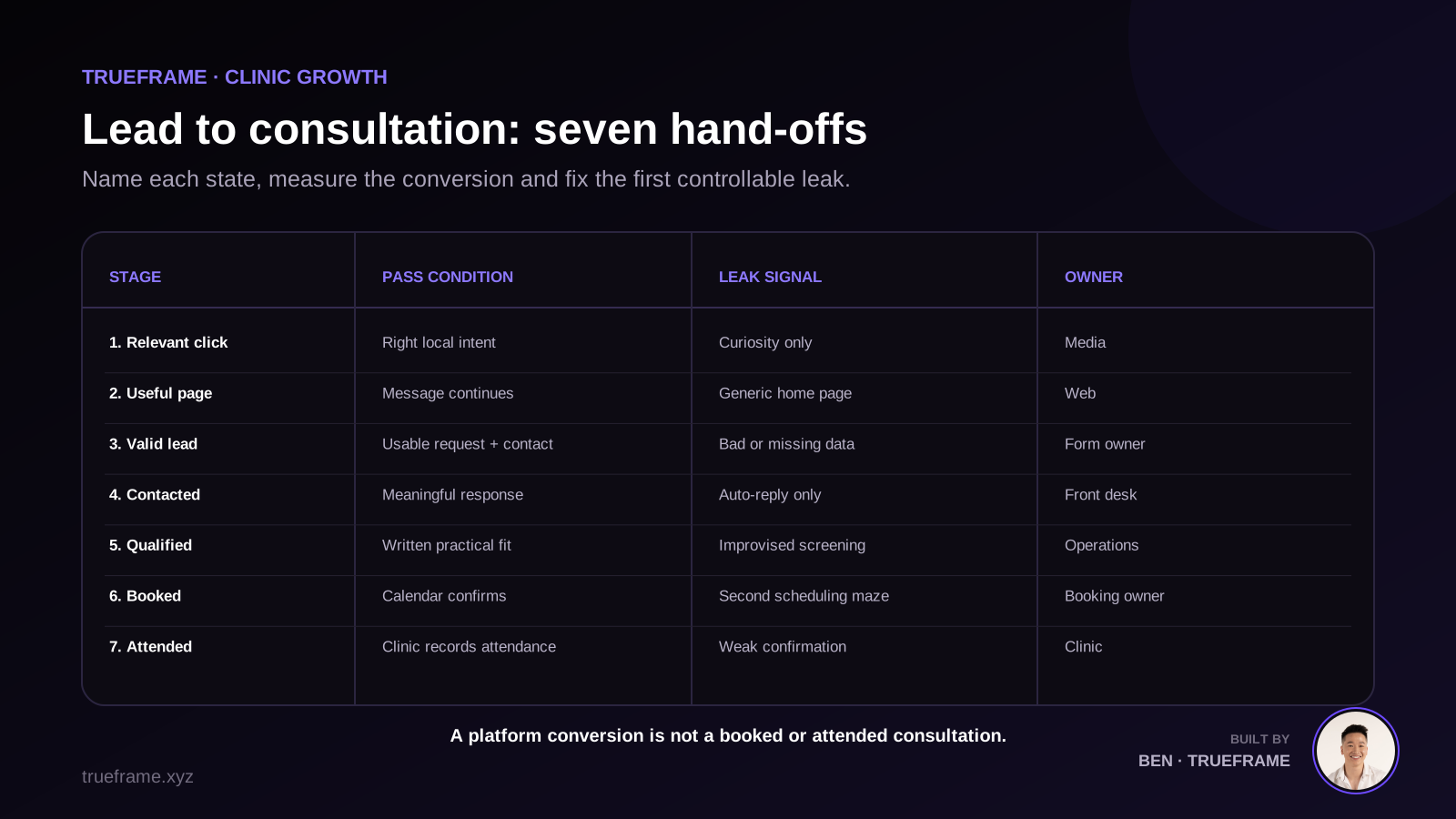
Swipe sideways to inspect the full graphic.
| State | Minimum definition | Do not call it |
|---|---|---|
| Lead | New contact details plus an identifiable request | A patient or booked consultation |
| Contacted | Meaningful two-way or documented attempted contact | Qualified |
| Qualified enquiry | Meets the clinic's written non-clinical fit and process criteria | Clinically suitable |
| Booked consultation | Appointment confirmed in the clinic's source-of-truth calendar | Attended |
| Attended consultation | Attendance recorded by the clinic | New patient or treatment revenue |
The first error is calling every form fill a lead
A platform conversion can mean a form submitted, a page loaded or an event sent successfully. It does not prove the contact details were usable, the enquiry matched the clinic, the team responded, the appointment was booked or the person attended. Keep each state separate and reconcile it to the clinic's own records.
Benjamin Chua
Clinic conversion audit
6
printable pages
PDF · Version 1.0 · Updated Sept 2026
Lead-to-Consultation Leak Audit
Trace one real lead through seven hand-offs, calculate stage conversion and assign the first leak worth fixing.
- A seven-stage funnel map with exact numerator and denominator definitions
- Mystery-enquiry scripts and a response-time evidence log
- A weekly leak board with owner, fix, deadline and retest fields
Stage conversion = people who reached the next state ÷ people eligible to reach it. Use the same definitions and date basis every week.
Leak 1: the message attracts curiosity, not intent
A dramatic visual, low price or broad transformation promise can produce form volume from people who do not understand the clinic, the consultation or the likely commitment. Match the opening to a real decision and make the next step explicit before the form.
- Name the consultation or decision being offered, not a vague 'learn more'.
- Let the practitioner answer one meaningful concern before asking for contact details.
- Keep claims balanced and source-supported, with the correct regional review.
- Avoid urgency that creates volume the front desk cannot convert responsibly.
Leak 2: the landing page does not finish the ad's job
The page should continue the exact question or promise that earned the click. It needs a real practitioner, clear consultation purpose, useful service context, clinic location, practical next steps and a visible privacy path. Sending every campaign to a generic home page forces the visitor to reconstruct the decision.
| Ad says | Page must answer | Leak signal |
|---|---|---|
| Meet the practitioner | Identity, qualifications, relevant scope and approach | Visitor searches elsewhere for basic credibility |
| Understand the consultation | What it covers, who it is for and the next step | Form asks for details before setting expectations |
| Ask about one concern | A useful answer plus clear limits | Generic service list replaces the promised answer |
| Book at this clinic | Location, access, contact, timing and hand-off | The visitor cannot tell what happens after submitting |
Connect marketing activity to the actual clinic booking path
Trueframe reviews the message, content, landing page, lead hand-off and measurement as one system, then identifies the first leak worth fixing.
See the Australian clinic growth systemLeak 3: the form creates bad data or unnecessary friction
A very short form can increase volume without giving the clinic enough context to respond. A long form can reduce completion and collect sensitive information the marketing workflow does not need. Define the minimum data required for a safe, useful hand-off, then test the form on a real phone.
- Collect a contact method, requested service or question and any non-clinical routing field the team truly uses.
- Do not ask people to disclose detailed medical information in an advertising lead form.
- State what happens next and when the person can expect a response.
- Send a confirmation that repeats the next step without implying clinical suitability.
Leak 4: the first response is late or generic
Measure from valid enquiry receipt to the first meaningful response, not to an automated acknowledgement. The response should show that the clinic received the actual request, explain the next step and make it easy to continue. A copied paragraph that ignores the question can feel like another form.
| Check | Pass condition | Owner |
|---|---|---|
| Routing | The right team member receives the enquiry once with source context | Operations |
| Timing | The response target is staffed and measured during advertised hours | Front desk |
| Relevance | The reply refers to the person's stated request without diagnosing | Front desk |
| Next step | One clear route to a call or consultation is offered | Booking owner |
| Privacy | Sensitive information is not repeated across unnecessary systems | Privacy owner |
Leak 5: qualification becomes remote clinical screening
The marketing and front-desk workflow can establish practical fit, such as location, service interest, timing and whether the person understands the consultation step. It should not promise suitability or replace the practitioner's assessment. Write the boundary and escalation route so staff do not improvise clinical advice in messages.
Leak 6: scheduling creates a second maze
A person who has decided to consult should not have to repeat the entire story, search for availability across several channels or wonder whether the appointment is confirmed. Test the booking experience from the campaign on mobile, then confirm what the front desk sees at the other end.
- Open the real campaign link on a phone outside the clinic's administrator accounts.
- Submit a clearly labelled internal QA enquiry that contains no patient data.
- Record every screen, delay, duplicate notification and repeated question.
- Confirm the source and stated request arrive with the lead.
- Complete the hand-off to a test appointment slot, then remove the QA record according to clinic procedure.
Leak 7: reminders do not reduce uncertainty
A reminder should confirm time, location, preparation, changes or cancellation and the purpose of the appointment. The clinic should measure attendance by source and booking lead time. More reminder messages are not automatically better, especially where marketing consent and healthcare communications have different rules.
Run the leak audit in one afternoon
| Stage | Count | Conversion | First evidence to inspect |
|---|---|---|---|
| Valid leads | Baseline | Source, message and usable contact details | |
| Meaningfully contacted | Contacted ÷ valid leads | Routing and response-time log | |
| Qualified enquiries | Qualified ÷ contacted | Written criteria and conversation notes | |
| Booked consultations | Booked ÷ qualified | Scheduling path and availability | |
| Attended consultations | Attended ÷ booked | Confirmation and reminder workflow |
Pick the largest meaningful leak that the team can control, assign one owner and change one part of the path. Run the same definitions for another week before moving to the next leak. A smaller fix with clean evidence is more useful than rebuilding the whole funnel from a hunch.
Australia and US privacy and advertising checks
Australian regulated health-service advertising can trigger Ahpra, National Board and TGA obligations, while US clinics may need to account for HIPAA, state privacy and professional rules. Marketing consent, treatment communications and permission to use health information are not interchangeable. Use the clinic's nominated privacy and clinical reviewers for the exact forms, messages, systems and claims. This article is operational guidance, not legal advice.
Fix the path in this order
- Define lead, contacted, qualified, booked and attended as separate states.
- Reconcile platform events to the clinic's booking records.
- Check message and page continuity before changing targeting.
- Measure meaningful response time and test the real mobile hand-off.
- Fix one evidenced leak, then rerun the same stage definitions.
Strengthen the full conversion system
Sources and review date
We use primary official sources for rules and platform guidance. This article is general information, not medical or legal advice.
- Lead ads with instant and website forms · Meta for BusinessReviewed 2 September 2026
- Marketing and the HIPAA Privacy Rule · U.S. Department of Health and Human ServicesReviewed 2 September 2026
- Guidelines for advertising a regulated health service · Ahpra and National BoardsReviewed 12 August 2026
- Guidelines for advertising higher risk non-surgical cosmetic procedures · Ahpra and National BoardsReviewed 12 August 2026
- Advertising health services and cosmetic injections: frequently asked questions · Therapeutic Goods AdministrationReviewed 12 August 2026
Skip the reading. Talk it through instead.
Book a fit call and we'll map out what a content engine looks like for your business. No pitch, no pressure.
Don't miss the next one
Some of what we share is time-sensitive. A format that's working right now, a window that closes fast. We email those the moment they're worth jumping on. Drop your email so you catch them in time.
No spam. Unsubscribe anytime.
Frequently asked questions
What is a good lead-to-consultation rate for an aesthetic clinic?
Why are our Meta leads low quality?
How quickly should a clinic respond to a lead?
Should an aesthetic clinic ask more questions on the lead form?
How do we track leads to booked consultations?
Should we increase ad spend when lead volume is low?
Founded & led by
Benjamin Chua (BenChuchu)
Founder and CEO of Trueframe. 9 years building businesses (started at 16), tens of millions of views generated, and 8 figures in revenue created for the founders and brands he works with. He builds the content systems Trueframe runs.