Ahpra and TGA Advertising Guide for Aesthetic Clinics (2026)
Reviewed against current official guidance on 12 August 2026. This guide helps clinic owners build a safer approval workflow, but it is general information and not legal advice.

Written by Benjamin Chua, founder of Trueframe.
On this page
- Start by deciding whether the material is advertising
- Testimonials: do not build the campaign around patient praise
- Images: context, consistency and realistic presentation matter
- Therapeutic goods and cosmetic injection references
- Influencers, creators and patient-generated material
- Offers, urgency and risk information
- The pre-publish approval record
Reviewed against the linked Ahpra and TGA guidance on 2026-08-12. This is general information, not legal advice or a compliance certificate.
The safest clinic marketing workflow is not 'make the ad, then ask whether it is compliant'. The clinical and regulatory constraints need to shape the brief, source material, filming, editing, offer, comments and approval record from the start.
Australian aesthetic clinic advertising can sit under several overlapping systems. The National Law and Ahpra advertising guidance apply to regulated health services. Specific guidance applies to higher-risk non-surgical cosmetic procedures. TGA rules matter when health-service advertising refers to or promotes therapeutic goods, including cosmetic injection services. Platforms and consumer law add their own requirements.
This guide turns the official sources into an approval workflow for owners and marketers. It does not replace reading the source material or getting advice on the clinic's facts.
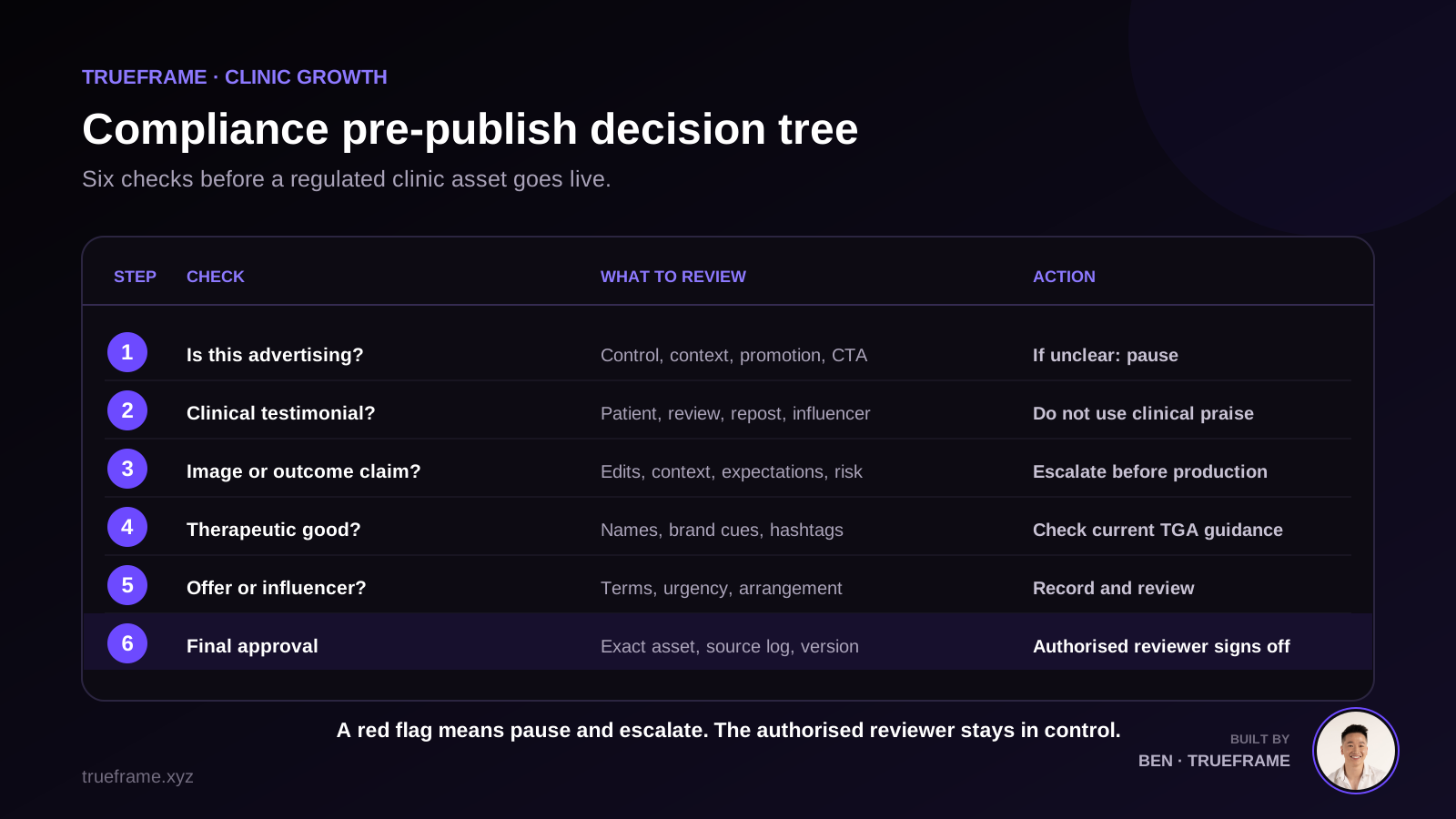
Swipe sideways to inspect the full graphic.
Start by deciding whether the material is advertising
Calling something education does not automatically remove it from advertising rules. Look at the content, context, account, links and commercial purpose. A practitioner explanation on a clinic channel can still promote the service or business. If the material is controlled by the clinic and encourages people to use the clinic or a regulated health service, treat the advertising question seriously.
- Who created, paid for, requested or approved the material?
- Where will it appear, including clinic pages, practitioner accounts, ads, stories and third-party channels?
- Does it identify or make it easy to identify the clinic, practitioner, service or therapeutic good?
- Does it invite an enquiry, booking, purchase or other commercial action?
- Could comments, tags, links or reposting turn third-party material into part of the clinic's advertising?
Testimonials: do not build the campaign around patient praise
The National Law prohibits using testimonials or purported testimonials in advertising a regulated health service when they concern clinical aspects. Ahpra describes clinical aspects as including the symptom or reason for seeking treatment, the diagnosis or treatment, the outcome, or practitioner skills and experience. In higher-risk cosmetic procedure advertising, the official guidance is especially clear about positive patient and influencer statements tied to the procedure or practitioner.
That means the clinic should not treat 'the patient said it in their own words' as a safe workaround. A patient story about what bothered them, the procedure experience or the result can be exactly the testimonial the rules address. The issue is how the clinic uses the statement in advertising, not whether the sentence came from a scriptwriter.
| Material | Why it needs attention | Operational response |
|---|---|---|
| Patient describes why they sought treatment and how they felt after | It refers to the reason, experience and outcome of a regulated service | Do not use it as clinic advertising without authoritative advice that the exact use is permitted |
| Influencer praises the procedure or practitioner | Influencer content can be a testimonial and the arrangement remains advertising | Pause the post, review the contract and remove the clinical endorsement from the campaign |
| Clinic reposts or likes a patient's positive procedure story | Republishing or interacting can make the statement part of the clinic's advertising | Moderate clinic-controlled surfaces and document the response policy |
| Comment only praises reception or appointment communication | Non-clinical service comments may fall outside the testimonial definition, but context still matters | Review the complete comment and placement before using it |
Images: context, consistency and realistic presentation matter
Images should not mislead, omit material context or create unreasonable expectations. For higher-risk cosmetic procedure advertising, read the specific image and social-media sections in the current guidelines. Review the original capture, editing, lighting, pose, timing, labelling, selection and surrounding copy together. A technically real photograph can still communicate a misleading comparison.
- Keep capture conditions and presentation consistent where a comparison is proposed.
- Do not use filters, retouching, angles or crops that exaggerate an outcome.
- Do not present one person's result as typical, guaranteed or available to everyone.
- Include balanced information and relevant risk context in a format people can actually read.
- Check whether the specific procedure, audience and platform trigger stricter requirements.
Therapeutic goods and cosmetic injection references
Health-service advertising can also unlawfully advertise therapeutic goods. The TGA updated its cosmetic-injection advertising FAQ on 21 July 2026 and directs advertisers to current guidance for health services involving therapeutic goods. Prescription-only medicines cannot be advertised to the public. The analysis depends on words, visuals, hashtags, booking paths and what a reasonable person would understand from the whole piece.
Do not rely on a list of substitute phrases copied from old social posts. Before using product names, brand cues, abbreviations, euphemisms, pack imagery or claims about how a product works, check the current TGA material and the full context. If the campaign needs a clever workaround to communicate the product, escalate it.
Build compliance into production, not the final edit
Trueframe structures the brief, source log, scripts, approval steps and final assets around the clinic's review owner. We do not replace legal advice or certify compliance.
See the Australian clinic marketing systemInfluencers, creators and patient-generated material
An influencer is not a regulatory firewall. If a clinic or practitioner arranges, pays for, gifts, approves or republishes promotional content, review it as advertising. Higher-risk cosmetic procedure guidance addresses influencer statements and social-media activity. The agreement should give the clinic approval rights, prohibit unapproved clinical claims and require the creator to follow moderation and disclosure rules.
Also plan for what happens after publication. A compliant caption can attract patient comments that introduce testimonials or product claims onto a clinic-controlled page. Assign moderation responsibility and response times. Do not like, pin or repost a positive clinical comment before it has been reviewed.
Offers, urgency and risk information
Ahpra advertising rules prohibit advertising that creates unreasonable expectations, encourages indiscriminate or unnecessary use, or offers an inducement without stating the terms and conditions. Cosmetic procedure audiences can also be vulnerable. A short deadline, countdown, bundle or price-led message needs review for its likely effect, not only whether the terms fit in the caption.
- State material terms clearly and where the audience can see them before acting.
- Avoid urgency or scarcity that pressures a person into a healthcare decision.
- Do not frame treatment as the route to happiness, social acceptance or a guaranteed identity change.
- Present benefits with balanced, readable information about limitations, suitability and risks where required.
- Check the offer against the specific National Board and procedure guidance, not only a generic promotion checklist.
The pre-publish approval record
| Field | What to record | Owner |
|---|---|---|
| Purpose and audience | Channel, commercial purpose, target audience and conversion action | Marketing owner |
| Claims and sources | Every factual or clinical claim and the primary source supporting it | Draft owner and clinical reviewer |
| Patient and creator material | Consent, testimonial analysis, influencer arrangement and comment plan | Clinic owner |
| Images and edits | Original files, capture conditions, modifications, labels and surrounding context | Creative owner and clinical reviewer |
| Therapeutic goods | Names, references, cues, hashtags and TGA review outcome | Authorised reviewer |
| Offer and risks | Terms, urgency, suitability, risk information and placement | Clinical or legal reviewer |
| Final approval | Exact final copy and asset, approver, date, version and source-review date | Nominated approver |
Approval should apply to the final version in its real placement. Changing the headline, crop, call to action, comments setting or landing page can change the advertising context. Re-review material after a meaningful change and refresh evergreen content when official guidance changes.
The clinic-owner rule of thumb
- Do not assume education, organic posting or a practitioner account sits outside advertising rules.
- Do not use a patient's own words as a testimonial workaround.
- Review images as a complete comparison and communication, not just as files.
- Use current TGA guidance before referring to cosmetic injection products or therapeutic goods.
- Treat influencers, comments and reposting as part of the campaign workflow.
- Keep a source log and final approval record, and escalate uncertainty instead of guessing.
Apply the guidance across the growth system
Sources and review date
We use primary official sources for rules and platform guidance. This article is general information, not medical or legal advice.
- Guidelines for advertising a regulated health service · Ahpra and National BoardsReviewed 12 August 2026
- Guidelines for advertising higher risk non-surgical cosmetic procedures · Ahpra and National BoardsReviewed 12 August 2026
- Advertising health services and cosmetic injections: frequently asked questions · Therapeutic Goods AdministrationReviewed 12 August 2026
Skip the reading. Talk it through instead.
Book a fit call and we'll map out what a content engine looks like for your business. No pitch, no pressure.
Don't miss the next one
Some of what we share is time-sensitive. A format that's working right now, a window that closes fast. We email those the moment they're worth jumping on. Drop your email so you catch them in time.
No spam. Unsubscribe anytime.
Frequently asked questions
Can Australian aesthetic clinics use patient testimonials?
Can an aesthetic clinic post before-and-after images?
Can a clinic advertise cosmetic injection brands or product names?
Can an influencer promote an aesthetic procedure?
Are discounts and offers allowed in clinic advertising?
Does following this checklist guarantee compliance?
Founded & led by
Benjamin Chua (BenChuchu)
Founder and CEO of Trueframe. 9 years building businesses (started at 16), tens of millions of views generated, and 8 figures in revenue created for the founders and brands he works with. He builds the content systems Trueframe runs.