Founder-Led Content ROI: 6 Real Case Studies and a 90-Day Measurement Framework
We reviewed six Trueframe client systems and kept the outcomes separate. This is the sourced record of what changed, how strong the attribution is, what each result fails to prove, and how to measure your own content against revenue.

Written by Benjamin Chua, founder of Trueframe.
On this page
- The six-case result table
- How we graded the evidence
- Case 1: Robert Ta connected a weekly podcast to six figures of pipeline
- Case 2: Siluet used creative volume to reach a documented 7:1 ROAS
- Case 3: Spruce Eco lowered the cost of learning in four weeks
- Cases 4 to 6: distribution moved before revenue was public
- Hamel Husain turned existing recordings into a new discovery channel
- Dr Marion Chan built reach around the doctor's expertise
- Hanis Herman paired a content format with an offer
- What the six cases have in common
- The two calculations to keep separate
- A 90-day founder-content measurement plan
- What this research does not claim
Founder-led content can produce revenue, pipeline, cheaper leads or stronger distribution. Those are four different results. Across six Trueframe client systems, the clearest commercial evidence was more than six figures of client-reported converted B2B pipeline, a documented 7:1 paid-media ROAS, and a four-week SaaS ad sprint that produced a best £3 cost per result with leads up 72% week over week.
The other three cases produced large gains in traffic, reach and followers. We include them because those gains matter at the top of a funnel. We do not rename them revenue. There is no blended average on this page because averaging pounds of pipeline, ROAS, YouTube traffic and Instagram followers would create a number with no business meaning.
The direct answer: founder-led content has positive ROI when attributed gross profit exceeds the full cost of strategy, production, distribution and founder time. Pipeline and reach can support that calculation. Neither belongs in the numerator until money closes.
The six-case result table
| Case | System and window | Observed outcome | Grade | What the result does not prove |
|---|---|---|---|---|
| Robert Ta, AI founder | Weekly podcast repurposed over 18 months | More than six figures of converted B2B pipeline, reported by the client and tied to leads who named the content | A | Exact spend, gross profit and deal list are private |
| Siluet, wellness brand | Paid creative engine producing 40+ ads per week | Documented 7:1 ROAS | A | ROAS is revenue divided by ad spend, not gross-profit ROI on the whole content system |
| Spruce Eco, B2B SaaS | Four-week Meta ad sprint with 30 to 40 exports | Best £3 cost per result and leads up 72% week over week | A | The £3 result came from the strongest hook; one weekly lift is not a long-run average |
| Hamel Husain, AI educator | Office hours and podcasts repurposed into YouTube and short-form | Shorts drove 30%+ of YouTube traffic; one new format reached 5x, with 29x comments and 7.5x saves | B | No course-revenue or enrollment figure is published for this comparison |
| Dr Marion Chan, surgeon | Doctor-led Instagram system, first five-week tracked window | Full-month reach rose from 48,840 to 430,563, or 8.8x; personal followers rose from 12,043 to 26,164 | B | One reel carried much of the reach; patient revenue was not attributed in the reviewed period |
| Hanis Herman, BJJ coach | Offer, buyer and repeatable format system | Instagram reached 1,054 followers, up 62% in the reported year | B | The stated $2,000 monthly offer target had not been reached at publication |
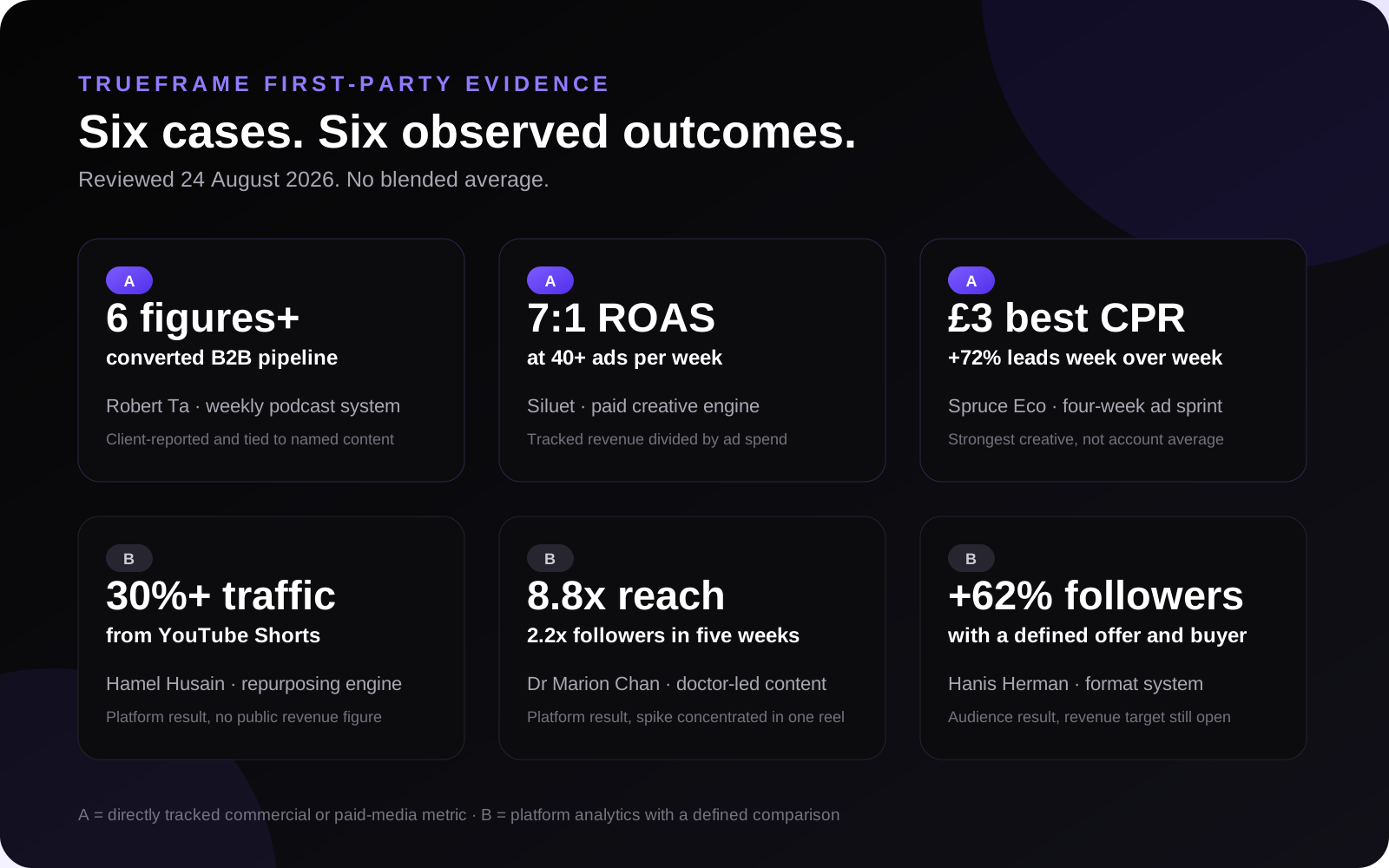
Swipe sideways to inspect the full graphic.
How we graded the evidence
Grade A means a commercial metric was connected directly to the content or paid creative through client tracking, account data or a recorded client review. Grade B means the result comes from platform analytics with a defined comparison window. Grade C means the production system is verified, but no downstream buyer result is public. A stronger grade says more about attribution. It does not make a smaller result less useful to the company that earned it.
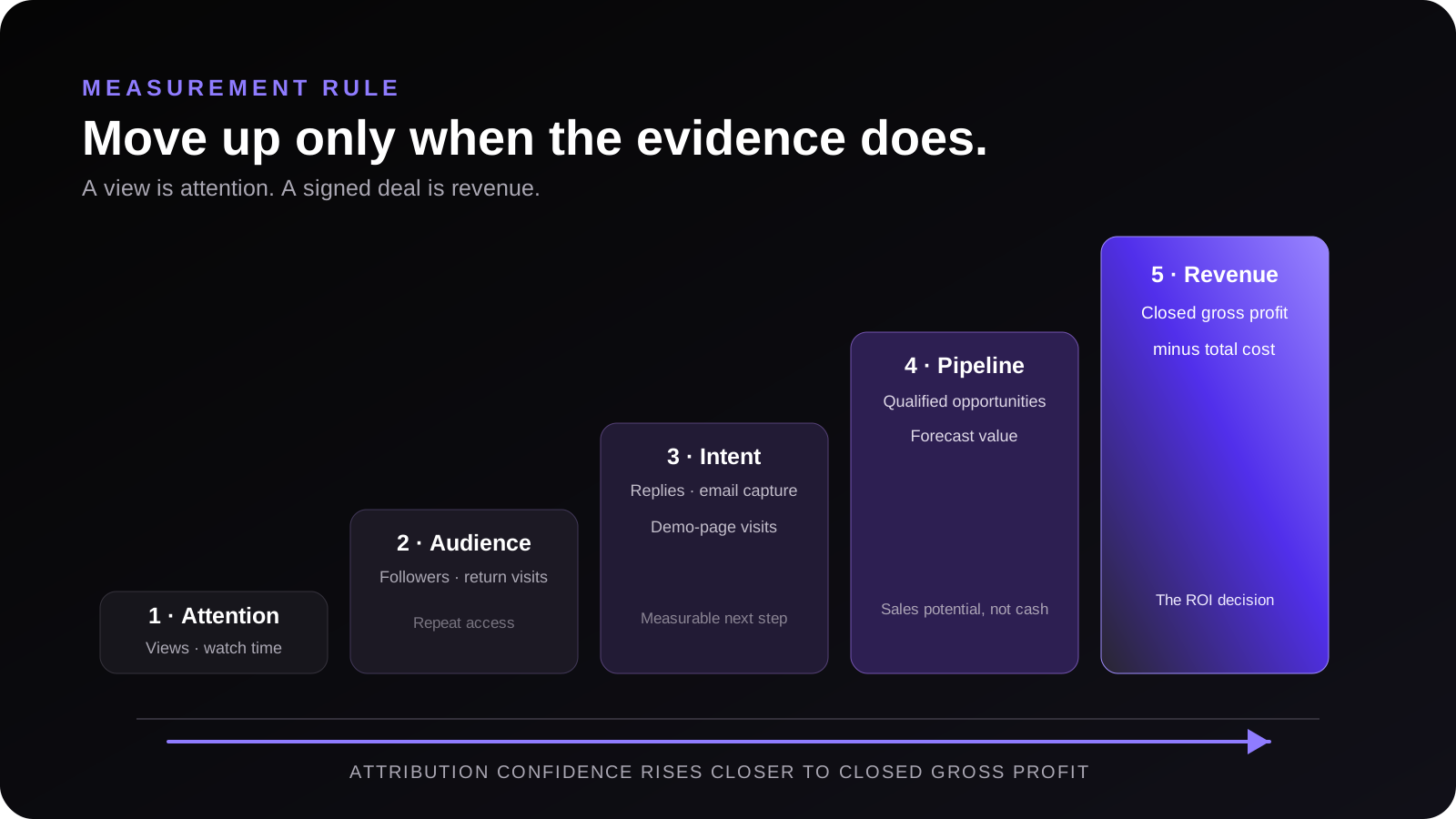
Swipe sideways to inspect the full graphic.
| Level | Useful measures | What it can answer | What it cannot answer alone |
|---|---|---|---|
| Attention | Qualified views, watch time, search impressions | Did the right people find and consume it? | Whether they became buyers |
| Audience | Followers, subscribers, returning visitors | Did some of that attention become repeat access? | Whether the audience has purchase intent |
| Intent | Replies, saves, email capture, demo-page visits | Did the content create a measurable next step? | Whether an opportunity qualified or closed |
| Pipeline | Qualified opportunities and pipeline value | Did content help create a sales conversation with value attached? | Whether forecast value became cash |
| Revenue | Closed gross profit tied to sourced or assisted deals | Did the return clear the full content cost? | Whether the same result will repeat without another test |
Case 1: Robert Ta connected a weekly podcast to six figures of pipeline
Robert Ta began without a working content presence after trying six agencies. The operating input became one weekly recorded conversation. The output was a repeatable set of long clips, shorts, packaging and distribution aimed at the enterprise AI buyers he wanted to reach.
After 18 months, Robert said he had tracked more than six figures in converted pipeline revenue from qualified leads who referenced specific content as the reason they trusted him. That direct client statement makes this the strongest organic-content attribution in the set. We still cannot calculate a public ROI percentage because his exact content spend, deal margin and customer list are private.
Case 2: Siluet used creative volume to reach a documented 7:1 ROAS
Siluet needed enough paid-social creative to keep testing as winning ads fatigued. The production engine reached more than 40 ads a week and returned a documented 7:1 ROAS, meaning roughly seven dollars in tracked revenue for each dollar of ad spend.
Benjamin Chua
Trueframe field tool
6
printable pages
PDF · Version 1.0 · Updated Aug 2026
Founder Content ROI Scorecard
Connect every content asset to attention, intent, pipeline and revenue, then run a clean 90-day review.
- Revenue ROI and pipeline-efficiency formulas
- Content-to-opportunity attribution worksheet
- 90-day leading and lagging indicator review
- Evidence-grade and decision checklist
That number is valuable and narrower than a full ROI calculation. It does not subtract product cost, agency fees or internal time. The repeatable lesson is that creative volume only helped because the ads were organised by angle, awareness level and footage requirement. Export count alone would not explain the return.
Case 3: Spruce Eco lowered the cost of learning in four weeks
For Spruce Eco, a UK heat-pump software company, the job was to test enough distinct paid-video ideas to find messages that worked in a skeptical niche. The sprint produced 30 to 40 Meta exports from 8 to 10 concepts, plus a launch hero and case-study video. Every ad was mapped to a buyer-awareness stage.
The strongest hook reached a £3 cost per result and overall leads rose 72% week over week in the recorded review. The performance guarantee was not triggered. The limit matters: £3 was the best creative, not the blended long-run account cost, and one weekly lift should not be forecast forever.
Cases 4 to 6: distribution moved before revenue was public
Hamel Husain turned existing recordings into a new discovery channel
Office hours, interviews and podcasts were already being recorded. Repurposing them gave YouTube a steady short-form input without another filming day. Shorts came to drive more than 30% of channel traffic. A new top-of-funnel format produced 5x the reach, 29x the comments and 7.5x the saves of the prior format. Those figures prove distribution and response. A public course-revenue comparison would be needed to claim ROI.
Dr Marion Chan built reach around the doctor's expertise
In Dr Marion Chan's first full month, content reached 430,563 people across her personal and clinic accounts, compared with a May baseline of 48,840. Her personal account moved from 12,043 followers to 26,164 in five weeks. One personality-led reel carried much of that jump, so the durable question is whether the system can keep producing qualified attention after the spike. The reviewed evidence does not attach a patient-revenue number to the growth.
Hanis Herman paired a content format with an offer
Hanis started with a small library and no clear product for the audience to buy. The work set a $499 offer, a specific buyer and four repeatable content formats. His Instagram reached 1,054 followers, up 62% in the reported year. The case remains an audience and offer-system result. His $2,000 monthly target had not been reached when the case study was published, and the record says so.
What the six cases have in common
- The founder or expert already had useful raw material. The missing part was selection, packaging and distribution.
- The content had a defined job. Robert needed qualified trust, Siluet and Spruce needed paid-creative learning, and the other three needed discovery and repeat audience access.
- The strongest cases connected a content identifier to a buyer action. A memory question in the sales process caught influence that platform analytics could not see.
- Volume worked when it increased the number of useful tests. It did not replace judgment about the buyer, hook or offer.
- The reported result stayed at the level the evidence supported. Reach did not become pipeline on paper, and pipeline did not become gross profit without a closed-deal record.
The two calculations to keep separate
| Measure | Formula | Use it for | Main trap |
|---|---|---|---|
| Revenue ROI | (Attributed gross profit - total content cost) / total content cost × 100 | A real investment decision after deals close | Using revenue before delivery cost or leaving founder time out of the spend |
| Pipeline efficiency | Qualified pipeline value / total content cost | Comparing early sales potential before the full cycle closes | Treating forecast pipeline as earned revenue |
| Paid creative ROAS | Attributed revenue / ad spend | Comparing paid-media return inside the ad account | Ignoring production fees, margin, refunds and attribution settings |
A $10,000 content programme that creates $100,000 of pipeline has 10x pipeline efficiency. If only $20,000 closes and the delivery gross margin is 50%, the attributed gross profit is $10,000. Revenue ROI is then 0%, before any argument about future value. The pipeline result was promising. The closed return only broke even.
A 90-day founder-content measurement plan
| Window | Primary question | Measures | Decision |
|---|---|---|---|
| Days 1 to 30 | Are we publishing useful work for the right buyer? | Output rate, qualified views, watch time, profile visits, buyer comments | Fix positioning, format or production friction |
| Days 31 to 60 | Is attention turning into identifiable intent? | Returning visitors, direct replies, email capture, demo-page visits, remembered posts | Fix the CTA, offer bridge or capture path |
| Days 61 to 90 | Is intent entering the sales system? | Booked calls, qualified opportunities, sourced and assisted pipeline | Keep, narrow or stop based on cost and sales quality |
| After the sales cycle | Did the channel return gross profit? | Closed revenue, gross margin, total content cost, sales-cycle time | Increase spend only when the return or evidence trend clears the preset gate |
- Give every asset a stable content ID and store it with the publish date, buyer, topic, platform and CTA.
- Carry source tags to the landing page and CRM without placing tracking parameters inside internal site links.
- Ask every lead how they found you and which person, post or video they remember. Keep the answer in their own words.
- Mark content as sourced when it created the first known touch, and assisted when it changed trust during an existing sales process.
- Review gross profit and total cost after the normal sales cycle. Do not force a 90-day revenue verdict on a nine-month enterprise sale.
Set the decision gate before publishing. If you invent the success metric after seeing the dashboard, every result can be made to look like a win.
What this research does not claim
- Six Trueframe clients are not a random sample of every founder or industry.
- The cases use different platforms, time windows, offers and outcome types.
- Three cases show commercial or paid-media attribution. Three show platform growth without a public revenue figure.
- Some figures come from client statements or private account screenshots rather than audited financial reports.
- A strong past result does not guarantee the same return for a new company.
The usable conclusion
- Founder-led content can reach commercial outcomes, but the evidence needs to stay attached to the metric it actually measured.
- Track from attention to audience, intent, pipeline and closed gross profit. Do not skip levels in the story.
- Use gross profit in the ROI numerator and include the full production and founder-time cost below it.
- Run a 90-day operating test, then wait through the normal sales cycle for the final revenue judgment.
- Pair analytics with a consistent memory question in every sales conversation to catch private and AI-assisted discovery.
Use the research in your own system
Want a measurable founder-content system?
We build the strategy, scripts, production and tracking around your expertise. The scorecard on this page shows exactly how we judge the work.
See founder video productionSources and review date
Primary sources, first-party data and review dates are listed below. Client-reported results and Trueframe analysis are labelled in the article.
- How B2B thought leadership influences hidden buyers · LinkedIn and EdelmanReviewed 24 August 2026
- 2025 B2B Marketing Benchmark: Trust Is the New KPI · LinkedIn and IpsosReviewed 24 August 2026
- B2B Content and Marketing Trends: Insights for 2026 · Content Marketing InstituteReviewed 24 August 2026
- Robert Ta podcast-to-pipeline case study · TrueframeReviewed 24 August 2026
- Siluet 7:1 ROAS case study · TrueframeReviewed 24 August 2026
- Hamel Husain YouTube growth case study · TrueframeReviewed 24 August 2026
- B2B SaaS ad sprint case study · TrueframeReviewed 24 August 2026
- Dr Marion Chan content growth case study · TrueframeReviewed 24 August 2026
- Hanis Herman BJJ content strategy case study · TrueframeReviewed 24 August 2026
Skip the reading. Talk it through instead.
Book a fit call and we'll map out what a content engine looks like for your business. No pitch, no pressure.
Don't miss the next one
Some of what we share is time-sensitive. A format that's working right now, a window that closes fast. We email those the moment they're worth jumping on. Drop your email so you catch them in time.
No spam. Unsubscribe anytime.
Frequently asked questions
Does founder-led content have a positive ROI?
How do you calculate founder-led content ROI?
How long does founder-led content take to work?
What should a founder track besides views?
What is a good content marketing ROI?
Can self-reported attribution be trusted?
Founded & led by
Benjamin Chua (BenChuchu)
Founder and CEO of Trueframe. 9 years building businesses (started at 16), tens of millions of views generated, and 8 figures in revenue created for the founders and brands he works with. He builds the content systems Trueframe runs.